-
Meibomian gland dysfunction and treatment
Sep 02 , 2021
MGD means Meibomian gland dysfunction, is a common eye disease in nowadays` life. With the development of technology and society, people cannot live without smart phone and computer and expose their eye to the much radiation and bacterial infection. Therefore, even 95% of people has MGD Problems. Here are the symptom of MGD: Blink frequently; Dry eyes and fatigue; Eye irritation, photophobia, sore...
Read More
-
The Worst Habits for Your Eyes
Sep 21 , 2022
The importance of an annual eye exam cannot be overstated. Not only does it help you keep tabs on any changes in your vision, but it’s a must for detecting the big vision thieves: glaucoma, cataracts and age-related macular degeneration (AMD), all of which can cause irreparable harm before you’ve even noticed any vision loss. Bad habit 1: Smoking Bad habit 2: Staring at your smartphone Bad h...
Read More
-
A Simple, Effective Tip for Mild Dry Eye that You Can Do at Work
Jan 09 , 2023
Whether or not you are a college student or a workplace professional, activities related to excessive close up work on the computer are likely an integral part of your daily life. For example, staring at computer screens for prolonged periods of time discourages blinking. Staring leads to eye problems related to dry eye. If you are looking for a healthy natural alternative to relieve dry eye, a ce...
Read More
-
What are the advantages of Eye Atomization Dry Eye Ophthalmic Nebulizer?
Sep 26 , 2025
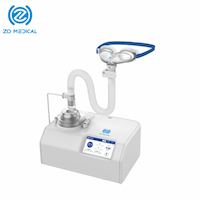
I. Core Technological advantages: More efficient therapeutic effects Ultrafine atomization for more efficient absorption: Advantages: It breaks down the liquid medicine or artificial tears into extremely fine mist-like particles (usually with diameters ranging from 1 to 5 micrometers), which are much smaller than those of traditional eye drops. This enables the drug to cover the entire ocular surf...
Read More
-
How can vein finder complement the workflow of ophthalmic medicine and imaging equipment?
Nov 27 , 2025
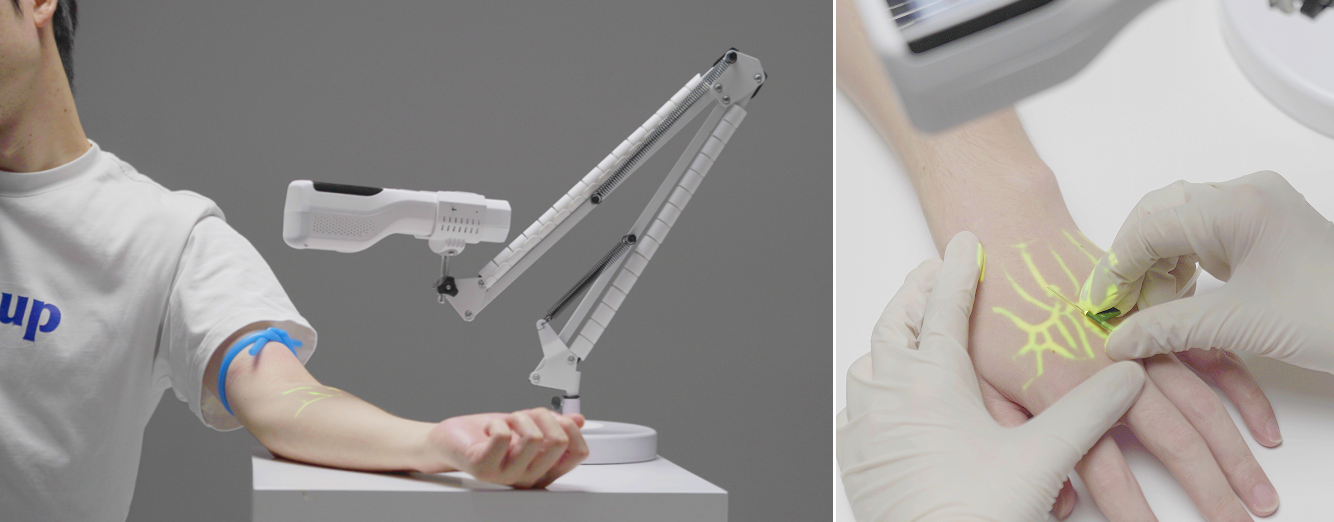
1) Core Value: Provide a unique "surface vascular map" Ophthalmic imaging equipment (such as OCT) focuses on the microscopic vascular structure of the fundus (retina, choroid), while venous detectors are adept at non-invasively visualizing the vascular network on the ocular surface and around the eye, especially: The blood vessels of the sclera and conjunctiva The blood vessels of the skin around ...
Read More
-
How ZD Medical High-Resolution OCT Platforms Are Revolutionizing Early Ophthalmic Diagnostics
Jul 20 , 2026
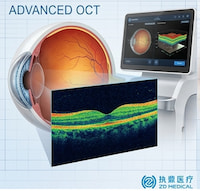
In modern ophthalmology, early detection is the ultimate cornerstone of preventing irreversible vision loss. As conditions like age-related macular degeneration (AMD), diabetic retinopathy, and glaucoma continue to rise globally, clinics require diagnostic imaging that balances microscopic precision with patient comfort. This is where Optical Coherence Tomography (OCT) stands as a non-negotiable s...
Read More
-
OCT vs. OCTA: What the Blood-Flow Layer Reveals That Structure Alone Cannot
Oct 15 , 2026
OCT shows you structure. OCTA shows you perfusion. A standard optical coherence tomography (OCT) scan answers the question "what does this tissue look like?" — it renders the retinal layers as a cross-section, micrometer by micrometer. OCT angiography (OCTA) answers a different question: "is blood actually reaching this tissue, and in which layer?" It builds that map from repeated OCT scans of the...
Read More
-
How to Choose an OCT Machine for Your Eye Clinic: A Complete Buyer's Guide (2026)
Nov 11 , 2026
What Should You Look For in an OCT Machine? Anoptical coherence tomography (OCT) machine should deliver clear retinal cross-sectional images, offer OCTA (OCT angiography) for vascular disease screening, include professional analysis software that reduces missed diagnoses at first examination, and fit your clinic's budget and workflow. Most outpatient clinics choose a screening-grade device, while ...
Read More





 IPv6 network supported
 English
 español
 العربية


