-
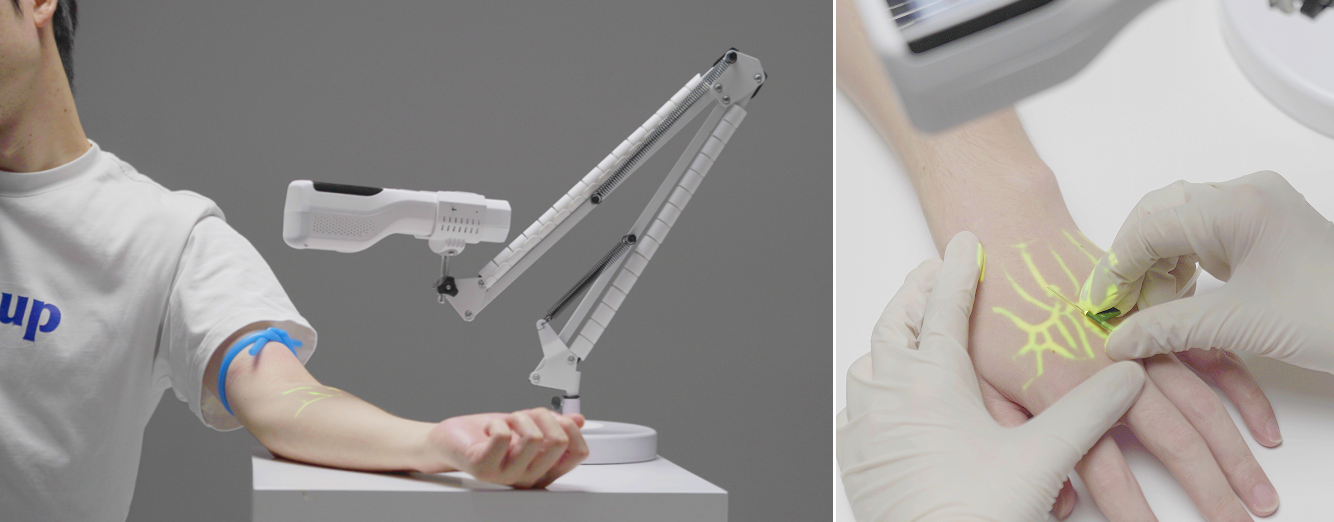
Can the ZD Medical intravenous Vein Finder be used for pets?
Jun 30 , 2026
Yes, the Vein Finder of ZD Medical can be fully utilized for both pets and other mammals. Although these devices were originally designed for humans, due to the underlying technical principles being applicable to mammals in general, they have already found certain applications in overseas veterinary clinics, pet hospitals, and animal laboratories. 1.The technical principle is completely unive...
Read More
-
How ZD Medical High-Resolution OCT Platforms Are Revolutionizing Early Ophthalmic Diagnostics
Jul 20 , 2026
In modern ophthalmology, early detection is the ultimate cornerstone of preventing irreversible vision loss. As conditions like age-related macular degeneration (AMD), diabetic retinopathy, and glaucoma continue to rise globally, clinics require diagnostic imaging that balances microscopic precision with patient comfort. This is where Optical Coherence Tomography (OCT) stands as a non-negotiable s...
Read More
-
The Vital Role of ZD Medical Near-Infrared Vein Finders in Modern Healthcare
Jul 20 , 2026
Vascular access is the most common invasive medical procedure performed globally. Yet, challenging venous access (DIVA)—common in pediatric, geriatric, bariatric, and dark-skinned patients—frequently leads to multiple needle insertion attempts. This not only causes patient trauma and anxiety but also increases infection risks, wastes valuable clinical time, and spikes hospital operational costs. H...
Read More
-
Why ZD Medical Emergency Cutters Are Indispensable in Critical Care and Tactical Rescue
Jul 20 , 2026
In emergency medical services (EMS), disaster response, and critical care units, time is the ultimate variable between life and death. When a trauma patient arrives, first responders must immediately remove restrictive clothing, seatbelts, or tactical gear to assess injuries and initiate life-saving interventions. Standard trauma shears often fail against heavy leathers, reinforced nylon, or thick...
Read More
-
OCT vs. OCTA: What the Blood-Flow Layer Reveals That Structure Alone Cannot
Oct 15 , 2026
OCT shows you structure. OCTA shows you perfusion. A standard optical coherence tomography (OCT) scan answers the question "what does this tissue look like?" — it renders the retinal layers as a cross-section, micrometer by micrometer. OCT angiography (OCTA) answers a different question: "is blood actually reaching this tissue, and in which layer?" It builds that map from repeated OCT scans of the...
Read More





 IPv6 network supported
 English
 español
 العربية


