-
Early detection of diabetic retinopathy using OCT imaging
Jan 22 , 2026
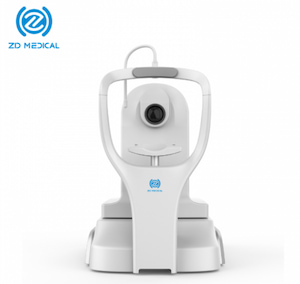
1) Traditional Screening Methods and Their Limitations Traditionally, the screening and staging of DR Mainly relied on color fundus photography to observe two-dimensional surface lesions such as retinal microaneurysms, hemorrhage and exudation. However, this method has limitations: Strong subjectivity: Relying on the doctor's experience. Inability to observe deep structures: It is impossible to qu...
Read More
-
How deep can a medical vein finder see?
Jan 27 , 2026
1. Main detection depth General depth: Most devices can detect veins 0.2 to 1.0cm beneath the skin, but the actual effective imaging range is usually concentrated on the shallower veins under the skin (0.2 to 1.0 cm). Best effect: For clearly visible superficial veins (such as the back of the hand and forearm), the imaging effect is the best. 2. Key influencing factors Skin condition Skin color, f...
Read More
-
What are the differences among some different vein finder?
Feb 10 , 2026
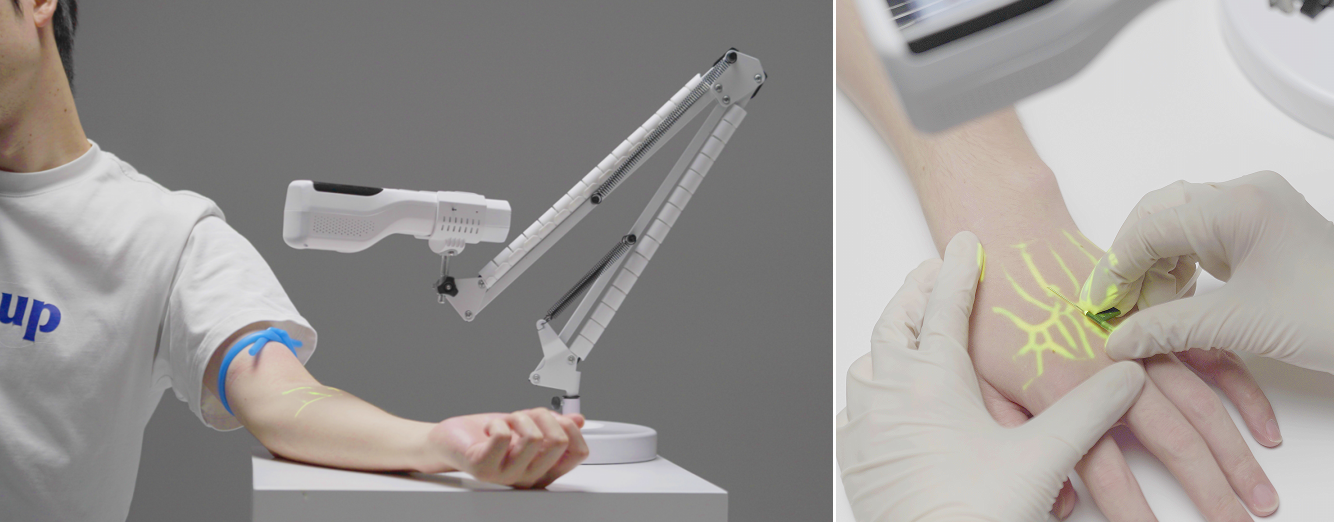
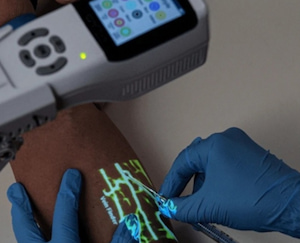
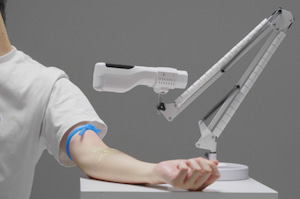
The following differences also need to be considered when making a choice: 1. Display mode Direct vision/projection: Project the vascular image directly onto the patient's skin. The advantage is that the operator does not need to shift their gaze and their hands and eyes are in perfect coordination. The drawback is that the projection may deform due to the curved surface of the skin. Screen displa...
Read More
-
How can portable venous imaging devices assist in door-to-door blood collection?
Mar 11 , 2026
1-Overcome the limitations of light and hardware in the home environment Uncontrollable lighting: Hospital blood collection rooms usually have bright, shadowless professional lighting, while the light in patients' homes is often dim, warm-toned, and even small, making it difficult for nurses to clearly see the blood vessels with their naked eyes. The assistance of the imaging device: The portable ...
Read More
-
Opportunities in Emerging Markets: What are the application potentials of vein finder in primary healthcare in developing countries?
Mar 12 , 2026
1. Bridging the "technical gap" of grassroots nurses In remote areas of developing countries, there is often a severe shortage of experienced intravenous therapy nurses, and the turnover rate of primary medical staff is high. Many newly graduated or insufficiently trained novices have an extremely high failure rate in puncture when dealing with difficult blood vessels. The imaging device can direc...
Read More
-
The clinical application of venous imaging equipment in oncology departments and chemotherapy wards
Apr 03 , 2026
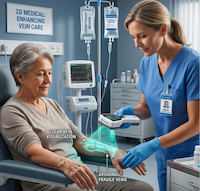
The main value of the venous imaging device in oncology departments and chemotherapy wards lies in addressing the "difficult needle insertion" problem faced by chemotherapy patients due to repeated punctures and deteriorating vascular conditions. It not only significantly improves the success rate of the first puncture, shortens the operation time, but also reduces the pain experience of patients ...
Read More
-
It Literally Lets You See the Veins! — How ZD Medical Vein Finders Redefine IV Access
Apr 15 , 2026
Venipuncture is the most common invasive medical procedure worldwide. Yet, for millions of patients and nurses, it remains a source of anxiety. Whether dealing with pediatric patients, the elderly, individuals with darker skin tones, or those undergoing chemotherapy, finding a viable vein often turns into a stressful guessing game. But what if you could take the guesswork out of the equation? What...
Read More
-
What are the advantages of the vascular imaging instrument of ZD Medical?
Apr 25 , 2026
Clinical and Technological Core Advantages (Hard Power) Near-infrared patented technology and high-definition in-situ projection: By leveraging the physical property that hemoglobin in the blood absorbs near-infrared light at a rate higher than that of surrounding tissues, the equipment can accurately capture vein images and project them in real time and at the original scale onto the patient's sk...
Read More
-
Can one drive after having the OCT eye examination?
May 06 , 2026
1. If it is a "non-mydriatic" examination (without dilating the pupils) - one can drive directly Many of the current high-end OCT devices (especially in routine screenings) have the feature of non-mydriatic examination. If the patient did not receive any eye drops to dilate the pupils before the examination, but simply looked at the cursor of the instrument for a while: Visual status: After the ex...
Read More





 IPv6 network supported
 English
 español
 العربية


