The following differences also need to be considered when making a choice:
1. Display mode
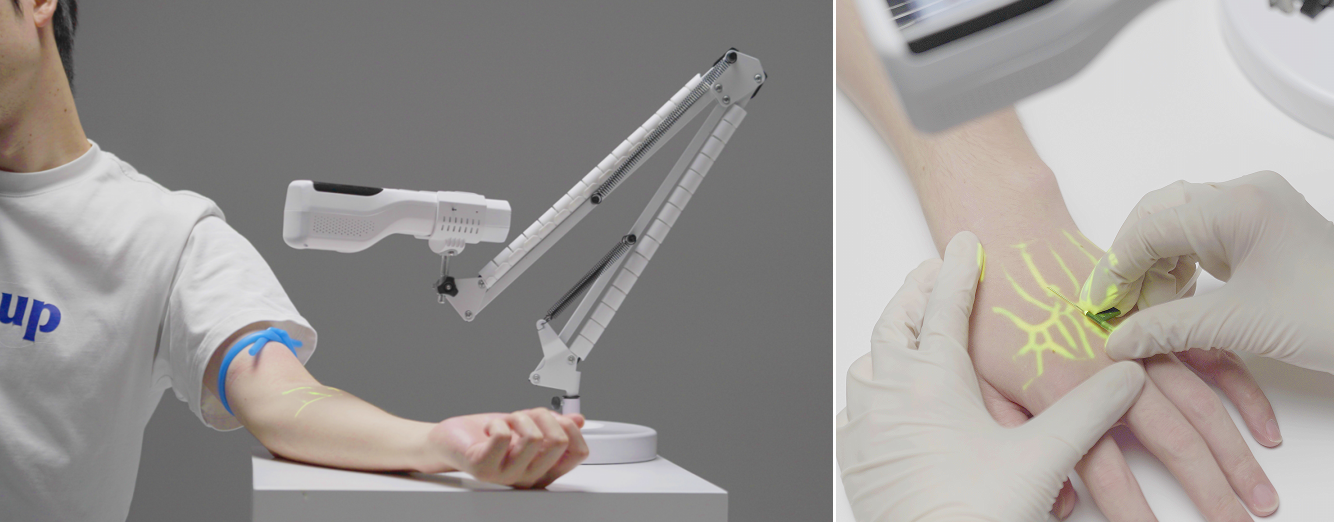
Direct vision/projection: Project the vascular image directly onto the patient's skin. The advantage is that the operator does not need to shift their gaze and their hands and eyes are in perfect coordination. The drawback is that the projection may deform due to the curved surface of the skin.
Screen display type: View vascular images on an independent display screen. The advantage is that the image is clear and stable, and can be viewed by multiple people. The drawback is that the operator needs to switch the line of sight between the patient's skin and the screen.
2. Portability and form
Handheld portable: The most common, it looks like a large flashlight or probe, is flexible and convenient, and can be used beside the bed.
Desktop/floor-standing: Usually more powerful in function, not easy to move, and often used in fixed departments.
Head-mounted/wearable: Free up hands, but still in the development stage and not widely used.
3. Functional differences
Simple positioning vs. navigation guidance
Positioning type: Only displays the location and direction of blood vessels. Most infrared devices fall into this category.
Navigation-guided type: It can not only display blood vessels but also provide real-time guidance on the insertion path and depth of the puncture needle through technologies such as laser indication and puncture needle tracking. Most high-end ultrasonic devices are equipped with this function.
Vascular recognition algorithm: Smart devices can automatically identify and outline the center line of blood vessels through algorithms, and even assess the suitability of blood vessels, rather than merely displaying an image.
4. Cost and Maintenance
Near-infrared equipment: The purchase cost is relatively low, almost no consumables are required, and maintenance is simple.
Ultrasonic equipment: The purchase cost is high, it requires consumables such as coupling agents, and the maintenance and professional training costs are also high.
How to choose?
For routine clinical needs (such as outpatient infusion rooms) : High-quality near-infrared light vein finder are the most cost-effective choice and can solve the puncture problems of most patients.
For patients with difficult puncture (such as ICU patients, the elderly, those undergoing chemotherapy for tumors, and obese patients) : Portable ultrasound
vein finder are more effective tools because they can "see" deep blood vessels and have a higher success rate.
For the establishment of medium to long-term vascular access: Ultrasound equipment is the gold standard, and even an essential tool, as it can assess vascular conditions, prevent accidental arterial puncture, and guide catheter placement in real time.
For institutions with limited budgets but still hoping to enhance the efficiency of punctures: They can start with mid-to-high-end near-infrared projection equipment, which can intuitively help nurses quickly locate.
Interested in becoming a distributor? Contact us for wholesale pricing.
Also welcome to contact us, we are ZD Medical Inc.
Tel : +86-187 9586 9515
Email : sales@zd-med.com
Whatsapp/Mobile : +86-187 9586 9515


 IPv6 network supported
 English
 español
 العربية


