-
Is optical coherence tomography worth it?
Apr 08 , 2025
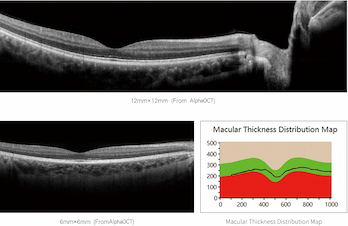
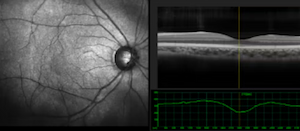
Optical coherence tomography (OCT) is a valuable imaging technology with diverse applications in medicine, particularly in ophthalmology and cardiology. Its utility depends on the clinical context, but here’s a comprehensive evaluation of its benefits and considerations: Key Benefits of OCT 1. Non-Invasive and Safe - OCT uses light waves (e.g., near-infrared) instead of radiation or invasive probe...
Read More
-
Holding hands and looking at the eyes to help with diagnosis | Suddenly
May 14 , 2025
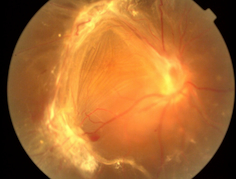
Common causes: tractional retinal detachment (TRD) is mainly caused by the traction of the fibrous vascular membrane on the surface of the retina or within the vitreous. Adult TRD is most commonly seen in proliferative diabetic retinopathy (PDR), retinal vein occlusion (RVO), retinal vasculitis and proliferative vitreoretinopathy (PVR). In addition, trauma, sickle cell retinopathy and uveitis, etc...
Read More
-
The Next Generation of OCT Technology Poised to Take Off and How AI is Reshaping the Future of OCT
May 29 , 2025
When OCT meets artificial intelligence, a diagnostic revolution quietly arrives: Automatic lesion identification: The algorithm based on convolutional neural network (CNN) can complete the pathological analysis of ophthalmic OCT images within 0.3 seconds, identifying dozens of lesions such as macular holes and retinal detachment, with an accuracy rate exceeding 95% Real-time surgical navigation: D...
Read More
-
Sudden blurring of vision could be a red alert for a systemic illness
Jul 10 , 2025
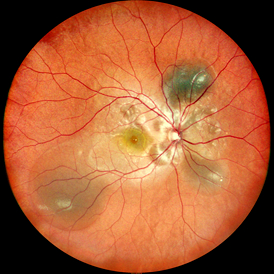
Exudative Retinal Detachment (ERD) is a lesion in which the neuroepithelial layer of the retina separates from the pigment epithelial layer without holes. The core mechanism is the destruction of the blood-retinal barrier or the imbalance of choroidal osmotic pressure, resulting in abnormal accumulation of plasma, lipids or blood in the subretinal space. Unlike rhegmatogenous or tractional detachm...
Read More
-
What advantages does the New Generation Vein Finder have for patients?
Nov 07 , 2025
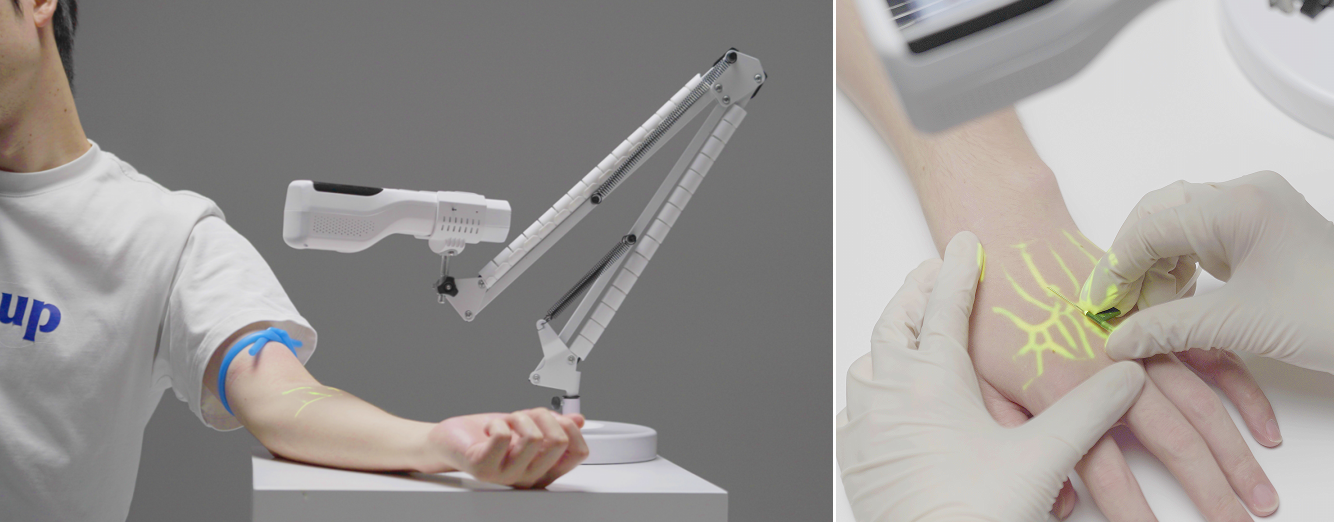
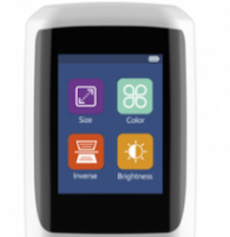
It greatly increases the success rate of venipuncture and reduces the pain of repeated needling Pain point: For infants and young children, obese patients, the elderly, those in shock or those who have been receiving intravenous fluids for a long time, their blood vessels are usually thin, deep, brittle or hard to reach. Nurses may need to make multiple attempts to successfully puncture. Advantage...
Read More
-
How can we avoid patients' tension when using a vein finder device?
Nov 21 , 2025
1) Communication Script: Transforming "Unknown" into "Knowable" The patient's tension mainly stems from the fear of unknown equipment and processes. Your words are the first line of defense against fear. 1. Popularize the introduction of the equipment (avoid using medical terms) : Don't say: "We are now using an ultrasound venous imager to find your blood vessels." It can be said: "Let's use this'...
Read More
-
Early detection of diabetic retinopathy using OCT imaging
Jan 22 , 2026
1) Traditional Screening Methods and Their Limitations Traditionally, the screening and staging of DR Mainly relied on color fundus photography to observe two-dimensional surface lesions such as retinal microaneurysms, hemorrhage and exudation. However, this method has limitations: Strong subjectivity: Relying on the doctor's experience. Inability to observe deep structures: It is impossible to qu...
Read More
-
Can one drive after having the OCT eye examination?
May 06 , 2026
1. If it is a "non-mydriatic" examination (without dilating the pupils) - one can drive directly Many of the current high-end OCT devices (especially in routine screenings) have the feature of non-mydriatic examination. If the patient did not receive any eye drops to dilate the pupils before the examination, but simply looked at the cursor of the instrument for a while: Visual status: After the ex...
Read More
-
How ZD Medical High-Resolution OCT Platforms Are Revolutionizing Early Ophthalmic Diagnostics
Jul 20 , 2026
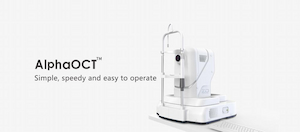
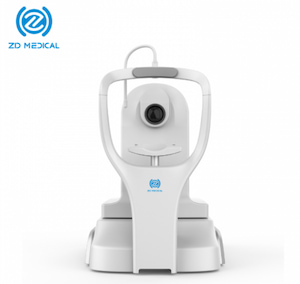
In modern ophthalmology, early detection is the ultimate cornerstone of preventing irreversible vision loss. As conditions like age-related macular degeneration (AMD), diabetic retinopathy, and glaucoma continue to rise globally, clinics require diagnostic imaging that balances microscopic precision with patient comfort. This is where Optical Coherence Tomography (OCT) stands as a non-negotiable s...
Read More



 IPv6 network supported
 English
 español
 العربية


