-
Holding hands and looking at the eyes to help with diagnosis | Suddenly
May 14 , 2025
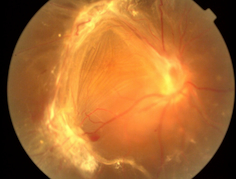
Common causes: tractional retinal detachment (TRD) is mainly caused by the traction of the fibrous vascular membrane on the surface of the retina or within the vitreous. Adult TRD is most commonly seen in proliferative diabetic retinopathy (PDR), retinal vein occlusion (RVO), retinal vasculitis and proliferative vitreoretinopathy (PVR). In addition, trauma, sickle cell retinopathy and uveitis, etc...
Read More
-
The Next Generation of OCT Technology Poised to Take Off and How AI is Reshaping the Future of OCT
May 29 , 2025
When OCT meets artificial intelligence, a diagnostic revolution quietly arrives: Automatic lesion identification: The algorithm based on convolutional neural network (CNN) can complete the pathological analysis of ophthalmic OCT images within 0.3 seconds, identifying dozens of lesions such as macular holes and retinal detachment, with an accuracy rate exceeding 95% Real-time surgical navigation: D...
Read More
-
Sudden blurring of vision could be a red alert for a systemic illness
Jul 10 , 2025
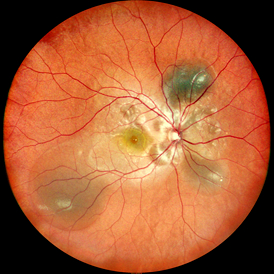
Exudative Retinal Detachment (ERD) is a lesion in which the neuroepithelial layer of the retina separates from the pigment epithelial layer without holes. The core mechanism is the destruction of the blood-retinal barrier or the imbalance of choroidal osmotic pressure, resulting in abnormal accumulation of plasma, lipids or blood in the subretinal space. Unlike rhegmatogenous or tractional detachm...
Read More
-
How does Optical Coherence Tomography reduce motion artifacts?
Aug 08 , 2025
1.Improvements at the hardware level (1) Increase the scanning speed Frequency domain OCT (FD-OCT) : Compared with time domain OCT (TD-OCT), FD-OCT has A faster scanning speed (up to tens of thousands to hundreds of thousands of A-scans per second), significantly reducing artifacts caused by patients' minor movements (such as eye tremors and breathing). Swept-frequency OCT (SS-OCT) : By rapidly tu...
Read More
-
Understanding Optical Coherence Tomography Technology in One Article.
Sep 02 , 2025
I. What is OCT? A Core Metaphor Let's understand OCT through a vivid analogy: Imagine a fresh sandwich. A regular camera can only capture its top view (a two-dimensional photo). OCT, however, acts like a precise “optical scalpel.” It can slice the sandwich layer by layer without damage, capturing ultra-high-resolution images of each component (bread, vegetables, meat slices). These cross-sectional...
Read More
-
How Optical Coherence Tomography Constructs a “Data Vault” Compliant with Cybersecurity Protection Standards
Sep 26 , 2025
The first step: Demarcate the boundaries of the "safe" and the environment (regional boundary security) OCT devices should not be directly exposed to public networks. First, it is necessary to plan the security domain. 1. Network partition isolation Medical equipment dedicated network: OCT devices, PACS servers, image storage servers, etc. are classified into an independent VLAN and logically isol...
Read More
-
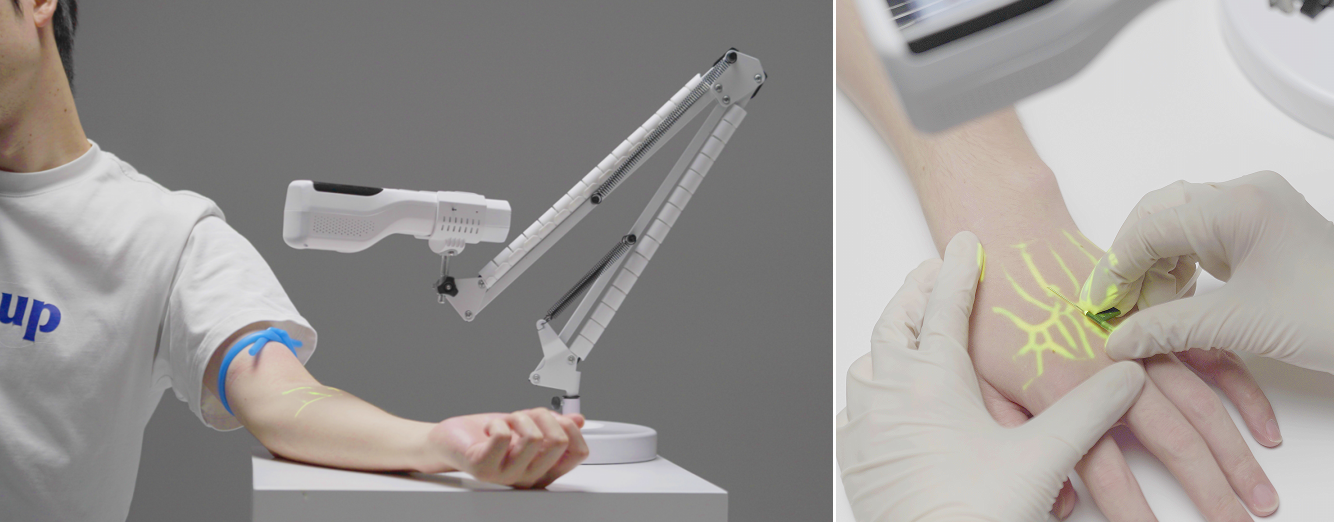
What advantages does the New Generation Vein Finder have for patients?
Nov 07 , 2025
It greatly increases the success rate of venipuncture and reduces the pain of repeated needling Pain point: For infants and young children, obese patients, the elderly, those in shock or those who have been receiving intravenous fluids for a long time, their blood vessels are usually thin, deep, brittle or hard to reach. Nurses may need to make multiple attempts to successfully puncture. Advantage...
Read More
-
How can we avoid patients' tension when using a vein finder device?
Nov 21 , 2025
1) Communication Script: Transforming "Unknown" into "Knowable" The patient's tension mainly stems from the fear of unknown equipment and processes. Your words are the first line of defense against fear. 1. Popularize the introduction of the equipment (avoid using medical terms) : Don't say: "We are now using an ultrasound venous imager to find your blood vessels." It can be said: "Let's use this'...
Read More
-
AI + OCT: How can artificial intelligence help ophthalmologists diagnose faster and more accurately?
Dec 09 , 2025
The combination of artificial intelligence (AI) and optical coherence tomography (OCT) is revolutionizing the diagnostic model of ophthalmic diseases. The core of this integration lies in combining the powerful data analysis capabilities of AI with the high-resolution biological tissue structure imaging of OCT, thereby providing doctors with insights that exceed the limits of human vision. Specifi...
Read More



 IPv6 network supported
 English
 español
 العربية


