-
Holding hands and looking at the eyes to help with diagnosis | Suddenly
May 14 , 2025
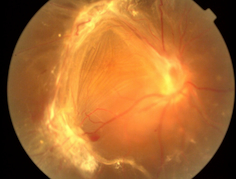
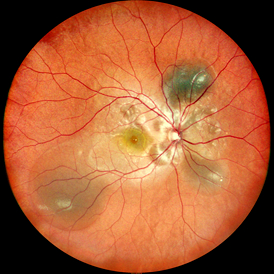
Common causes: tractional retinal detachment (TRD) is mainly caused by the traction of the fibrous vascular membrane on the surface of the retina or within the vitreous. Adult TRD is most commonly seen in proliferative diabetic retinopathy (PDR), retinal vein occlusion (RVO), retinal vasculitis and proliferative vitreoretinopathy (PVR). In addition, trauma, sickle cell retinopathy and uveitis, etc...
Read More
-
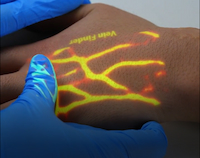
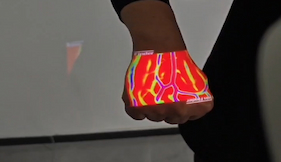
What are the relevant foreign research and technological advancements regarding Vein Finder?
May 23 , 2025
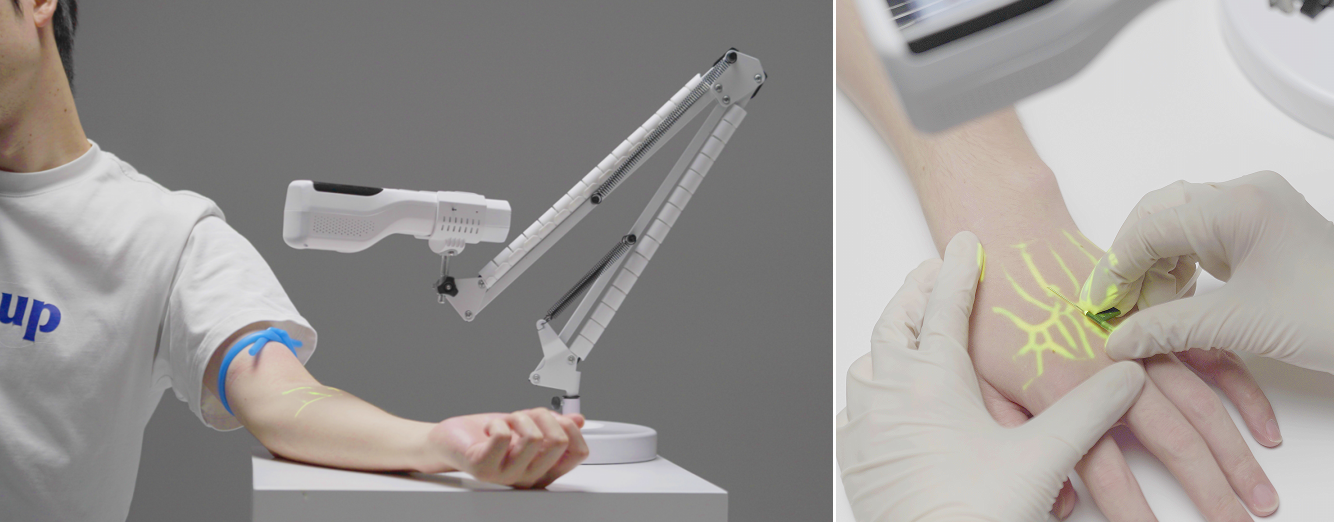
1.The application of Doppler ultrasound technology in venous localization A research team from the Georgia Institute of Technology in the United States has developed a low-cost handheld device that uses Doppler ultrasound technology to quickly locate veins. This device distinguishes arteries from veins by emitting ultrasonic beams and analyzing blood flow reflection signals, and guides punctures i...
Read More
-
The Next Generation of OCT Technology Poised to Take Off and How AI is Reshaping the Future of OCT
May 29 , 2025
When OCT meets artificial intelligence, a diagnostic revolution quietly arrives: Automatic lesion identification: The algorithm based on convolutional neural network (CNN) can complete the pathological analysis of ophthalmic OCT images within 0.3 seconds, identifying dozens of lesions such as macular holes and retinal detachment, with an accuracy rate exceeding 95% Real-time surgical navigation: D...
Read More
-
Clinical Applications of Vein Finder
Jul 03 , 2025
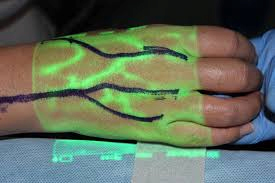
1.Venipuncture assistance Conventional venous puncture、Increase the success rate of puncture The success rate of traditional puncture (relying on palpation and visual inspection) is approximately 60-75%, while it can be increased to 85-95% after using a vein finder, especially for patients with higher difficulty levels (such as children, the elderly, and obese individuals), the effect is particula...
Read More
-
Sudden blurring of vision could be a red alert for a systemic illness
Jul 10 , 2025
Exudative Retinal Detachment (ERD) is a lesion in which the neuroepithelial layer of the retina separates from the pigment epithelial layer without holes. The core mechanism is the destruction of the blood-retinal barrier or the imbalance of choroidal osmotic pressure, resulting in abnormal accumulation of plasma, lipids or blood in the subretinal space. Unlike rhegmatogenous or tractional detachm...
Read More
-
How does Optical Coherence Tomography reduce motion artifacts?
Aug 08 , 2025
1.Improvements at the hardware level (1) Increase the scanning speed Frequency domain OCT (FD-OCT) : Compared with time domain OCT (TD-OCT), FD-OCT has A faster scanning speed (up to tens of thousands to hundreds of thousands of A-scans per second), significantly reducing artifacts caused by patients' minor movements (such as eye tremors and breathing). Swept-frequency OCT (SS-OCT) : By rapidly tu...
Read More
-
Who is Vein Finder suitable for?
Aug 08 , 2025
1. Patients with difficulty in venipuncture Typical population Obese people (with thick subcutaneous fat layers and deeply hidden veins). Infants and children (with thin blood vessels and low cooperation). The elderly (with poor vascular elasticity and prone to rolling). Patients who have received long-term intravenous infusion or chemotherapy (with hardened blood vessels and many scars). Scene va...
Read More
-
Tips for Vein Finder to successfully draw blood
Aug 12 , 2025
1. Equipment selection and calibration (1) Select the appropriate Vein Finder type Infrared type (such as ZD Medical Vein Finder Systemr) : Suitable for superficial veins (back of the hand, forearm, leg and so on). Portable (such as wireless handheld type) : Suitable for emergency or mobile blood collection. (2) Equipment calibration and environmental adjustment Adjust the brightness/contrast: Ens...
Read More
-
Understanding Optical Coherence Tomography Technology in One Article.
Sep 02 , 2025
I. What is OCT? A Core Metaphor Let's understand OCT through a vivid analogy: Imagine a fresh sandwich. A regular camera can only capture its top view (a two-dimensional photo). OCT, however, acts like a precise “optical scalpel.” It can slice the sandwich layer by layer without damage, capturing ultra-high-resolution images of each component (bread, vegetables, meat slices). These cross-sectional...
Read More



 IPv6 network supported
 English
 español
 العربية


