-
How does Optical Coherence Tomography reduce motion artifacts?
Aug 08 , 2025
1.Improvements at the hardware level (1) Increase the scanning speed Frequency domain OCT (FD-OCT) : Compared with time domain OCT (TD-OCT), FD-OCT has A faster scanning speed (up to tens of thousands to hundreds of thousands of A-scans per second), significantly reducing artifacts caused by patients' minor movements (such as eye tremors and breathing). Swept-frequency OCT (SS-OCT) : By rapidly tu...
Read More
-
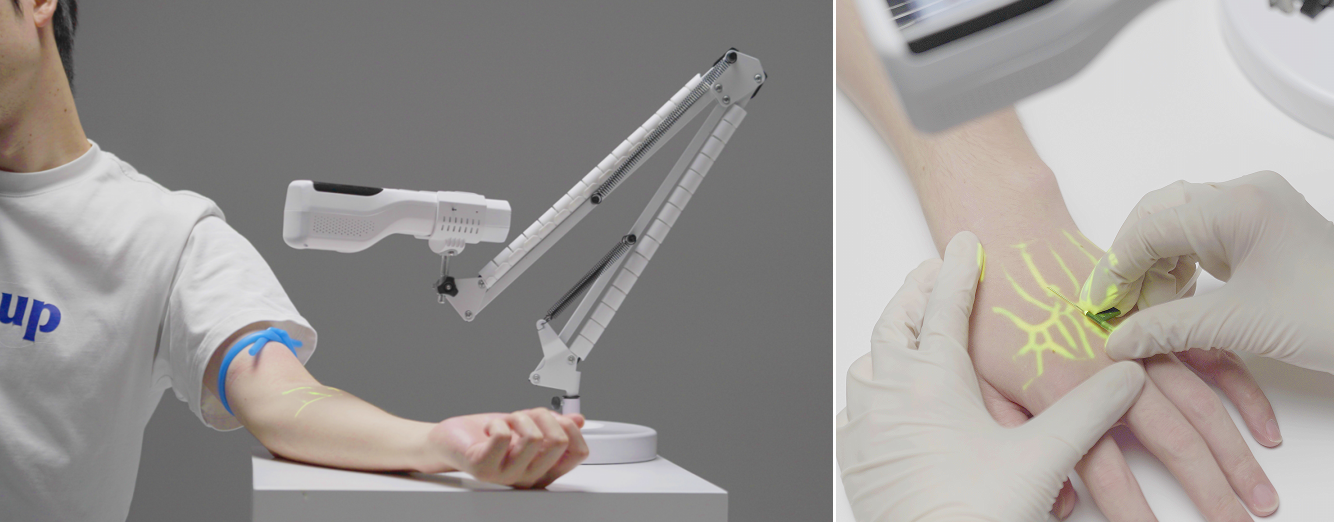
Who is Vein Finder suitable for?
Aug 08 , 2025
1. Patients with difficulty in venipuncture Typical population Obese people (with thick subcutaneous fat layers and deeply hidden veins). Infants and children (with thin blood vessels and low cooperation). The elderly (with poor vascular elasticity and prone to rolling). Patients who have received long-term intravenous infusion or chemotherapy (with hardened blood vessels and many scars). Scene va...
Read More
-
Understanding Optical Coherence Tomography Technology in One Article.
Sep 02 , 2025
I. What is OCT? A Core Metaphor Let's understand OCT through a vivid analogy: Imagine a fresh sandwich. A regular camera can only capture its top view (a two-dimensional photo). OCT, however, acts like a precise “optical scalpel.” It can slice the sandwich layer by layer without damage, capturing ultra-high-resolution images of each component (bread, vegetables, meat slices). These cross-sectional...
Read More
-
Early detection of diabetic retinopathy using OCT imaging
Jan 22 , 2026
1) Traditional Screening Methods and Their Limitations Traditionally, the screening and staging of DR Mainly relied on color fundus photography to observe two-dimensional surface lesions such as retinal microaneurysms, hemorrhage and exudation. However, this method has limitations: Strong subjectivity: Relying on the doctor's experience. Inability to observe deep structures: It is impossible to qu...
Read More
-
Can one drive after having the OCT eye examination?
May 06 , 2026
1. If it is a "non-mydriatic" examination (without dilating the pupils) - one can drive directly Many of the current high-end OCT devices (especially in routine screenings) have the feature of non-mydriatic examination. If the patient did not receive any eye drops to dilate the pupils before the examination, but simply looked at the cursor of the instrument for a while: Visual status: After the ex...
Read More
-
Will the Vein Finder imaging be affected by ambient light?
May 06 , 2026
Yes, strong ambient light like surgical lights or bright sunlight can wash out the projection of basic vein finders. However, our device is designed for complex clinical environments. It features adjustable high-lumen projection and an Inverse Display Mode. This ensures that even in brightly lit ERs or operating rooms, the vein network remains sharply contrasted and clearly visible, preventing any...
Read More
-
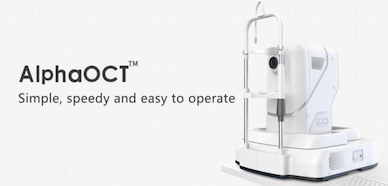
How ZD Medical High-Resolution OCT Platforms Are Revolutionizing Early Ophthalmic Diagnostics
Jul 20 , 2026
In modern ophthalmology, early detection is the ultimate cornerstone of preventing irreversible vision loss. As conditions like age-related macular degeneration (AMD), diabetic retinopathy, and glaucoma continue to rise globally, clinics require diagnostic imaging that balances microscopic precision with patient comfort. This is where Optical Coherence Tomography (OCT) stands as a non-negotiable s...
Read More



 IPv6 network supported
 English
 español
 العربية


