-
Light vs. Sound: When a Near-Infrared Vein Finder Is the Better First-Line Tool for Peripheral IV Access
Oct 15 , 2026
The question most facilities get wrong When peripheral IV access becomes difficult, the instinct is to reach for the most powerful tool available. That instinct is understandable, and it is also the reason ultrasound machines are sometimes tied up on a 26-gauge paediatric stick while a deeper line waits in the corridor. The real question is not "which device is better?" It is "which device is righ...
Read More
-
Why Are First Sticks So Hard on Children and Elderly Patients — and Can a Vein Finder Help?
Oct 30 , 2026
Why Pediatric and Geriatric Veins Are Different Pediatric patients (newborn to school age) Small vein diameter: target veins in infants are often under 2 mm, below the reliable range of visual inspection alone. Subcutaneous fat: in infants and toddlers, veins are neither visible nor easily palpable. Low fill under crying or cold stress: vasoconstriction makes already-small veins practically disapp...
Read More
-
How Does an Infrared Vein Finder Work? The Science of Vein Visualization Explained
Nov 19 , 2026
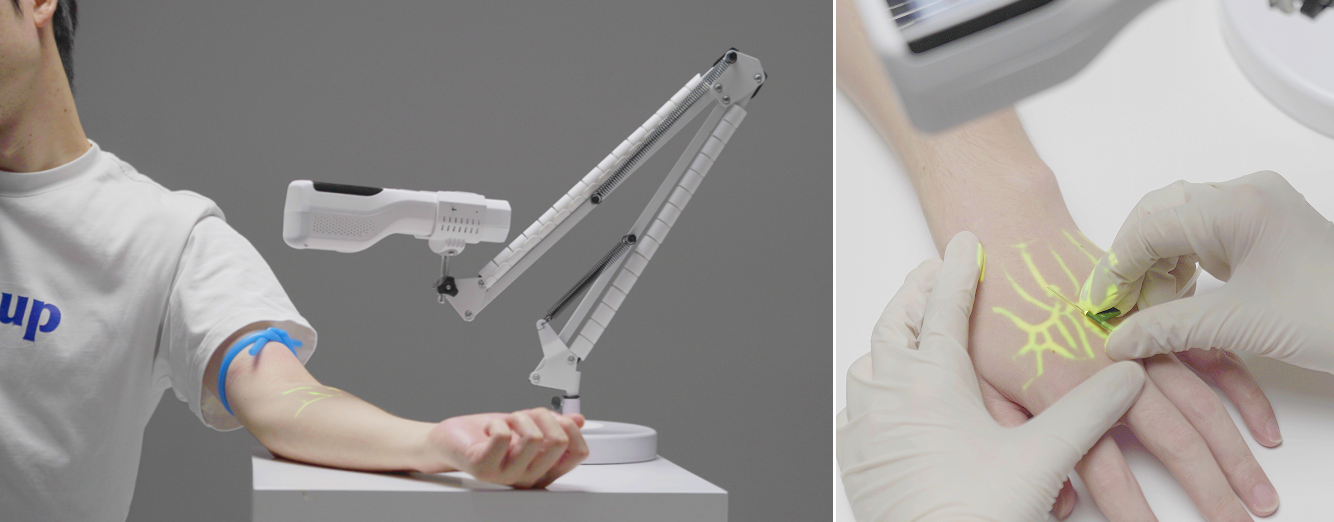
An infrared vein finder works by projecting near-infrared light (typically around 850 nm) onto the skin. Hemoglobin inside superficial veins absorbs this light far more strongly than the surrounding tissue, so the light reflected back to the device's camera creates a natural contrast pattern. A processor enhances this pattern in real time and a small projector displays the vein map directly onto t...
Read More




 IPv6 network supported
 English
 español
 العربية


